
|
ELMACH - MASZYNY CNC
Wygiełzów 35a 27-570 Iwaniska POLAND |
ELMACH - ODDZIAŁ MOSTKI
Mostki 66D 28-200 Staszów POLAND |
|
OPENING HOURS
Mon-Fri 08:00 - 16:00 |
PHONE
+48 888-027-736 |
|
EMAIL
cnc@elmach.net |
BANK ACCOUNT
PL 04 1140 2004 0000 3302 6845 3852 SWIFT: BREXPLPWMBK |
Comparison of popular metal cutting methods.
25/03/2020, 12:05
Plasma cutting
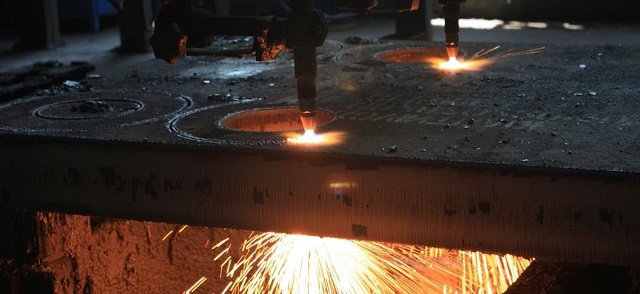
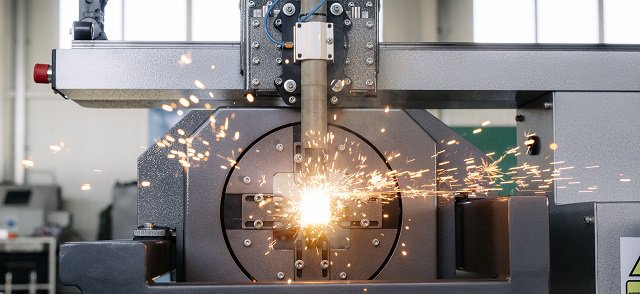
Currently, this is the most popular method of cutting metal, it have many benefits.
Most important - it's inexpensive. A wide range of cutting thicknesses starting from 0.4 mm to several millimeters obtaining relatively good cutting quality. Cutting quality can be improved by using narrow-jet plasma.
Wide range of types of material.
In principle, it is possible to cut any material that conducts electricity, but it is most often used to cut mild steel, stainless steel and aluminum.
The basic advantages:
- Cutting speed - plasma cutters work even several times faster than oxy-gas cutters.
- Low cost of purchasing and operating the device.
- Fast material penetration.
- Possibility of full process automation.
- Precision and the ability to work from many angles.
- High cutting quality that guarantees smooth edges.
- A small cutting gap, allowing minimal interference in the part of the untreated sheet.
- Reduction of material losses due to a small cutting zone.
- The possibility of marking details
- Using WMS technology (cutting in water fog cover), it is possible to cut stainless steel and aluminum free of oxides which are the cause of weld cracking. Also we can cut materials covered with protective foil as it during laser cutting process.
Disadvantages of plasma cutting:
- A lot of noise during the cutting process of plasma cutters.
- High UV radiation.
- Structural changes occurring in the cutting zone.
- Difficulties with keeping the straight angle of the edge of cutted material.
- High gas and smoke concentration.
Fiber Laser VS CO2
There are many different opinions about fiber and CO2 lasers in the network. Usually these informations are written by companies producing suitable type of machine.
It's easy to guess that everyone wants to prove the advantage of their machines.
Also you can find opinions of the machine operators who have been worked for a long time on one of device types, and after that they came into contact with others type of the machine and in a short time they hastily give opinions about it.
We will try to present this issue in a different way, and show you disadvantages and advantages of both types of lasers
CO2 laser – advantages:
- Its very good for machining non-ferrous materials and most plastics, woods, glasses, paper and leather matertials.
- CO2 lasers are intended for processing mainly relatively thick sheets, especially for black steel. Depending on the model, it is possible to cut material up to 40 mm thick (usually 20-30 mm thick, depends on the power of source)
- Cutting thick sheets with a CO2 laser is more comfortable. Due to the larger diameter of the beam, a wider gap is created when cutting, which makes it easier to remove details
- CO2 lasers are less sensitive to changes in cutting technology. That mean minimal change in parameters does not have as much influence on the processing result as in the case of fibers
- an important advantage of these machines is also limit of the minimum power.
- less sensitive to dirt and wear of consumable parts
- large focal range
- In the past, the price difference between CO2 and fiber laser was was given as an advantage. Currently prices are at a similar level.
CO2 type lasers – disadvantages:
- Definitely this is older technology. The devices of this type are much bigger than fibers lasers, morore complicated and have lower efficiency. This is because the laser beam loses its power before it reaches the workpiece, ray is reflecting on the way in the mirrors. The mirrors are require frequent maintenance.
- very high demand for electricity compared to the fiber laser
- the machine consumes several times more electricity in the StandBy mode than a typical fiber laser during the machining process.
- the optics are more developed, e.g. enlarged by mirrors. The ray source is much bigger , the radiator are also larger and the beam routing is completely different.
- when the machine is at a standmode, clean nitrogen must be delivered. This is a cost that does not occur in fiber optic technology.
- additional supported gas is needed
- The ray is guided in a very high purity gas shield so that the ray transmission is as accurate as possible between the mirrors.
- The biggest limitation on the use of CO2 lasers is the inability to cut reflective materials and materials such as copper, brass, aluminum and similar.
- Is more expensive to use.
To sum up, the CO2 laser is larger, contains more elements, is more expensive to operate, but is perfect for cutting thick sheets, and in combination with properly selected technology, the quality does not differ much compare the fiber technology.
Fiber laser - advantages
- The fiber laser is much smaller because it has a smaller source, a smaller radiator, less extensive optics, the mirrors have been replaced with a fiber optic beam.
- It is a machine especially recommended for thin sheet processing (the advantage is speed and cutting quality, perfect for machining stainless steel)
- fiber optic laser is much faster than CO2, you can set the most optimal parameters of the processed material, therefore, the performance is much higher.
- very high efficiency. Up to 70% less power consumption compared to lasers working in CO2 technology, which reduces the cost of use,
- possible to process reflective materials, e.g. brass, copper,
- does not consume electricity when is not in use
- uproszczona obudowa oraz bezobsługowy światłowód sprawiają, że koszty serwisowania fiberów są znacznie niższe w porównaniu z maszynami laserowymi typu CO2.
- simplified housing and maintenance-free optical fiber mean that fiber servicing costs are significantly lower compared to CO2 laser.
fiber laser - disadvantages:
- Fiber lasers are sensitive to dirt and parts wear. Even the smallest scratches on the optics or minimal wear of the parts significantly affect the quality of the cut or even prevent cutting. The problem can be eliminated by proper maintenance of the machine.
- machining of a thicker material is possible, but because of the small ray, it is difficult to pull out the details (the gap is too small). It is simply uncomfortable
- there is a minimum power range (about 10%) below which the laser does not emit a ray.
In summary, fiber lasers are relatively cheaper to use, more efficient, smaller and better for processing thin material, but they are not suitable for cutting thick sheets. Proper machine maintenance ensures low maintenance costs. The cost of purchase compared to CO2 is the same.
Water cutting
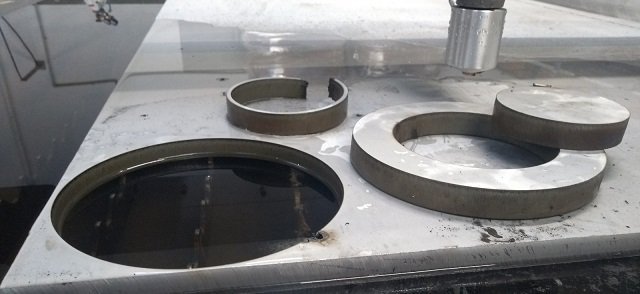
Hydroabrasive cutting is a method of cutting with a water jet with or without the addition of an abrasive. It is a cutting process designed for all types of materials from metal to glass and wood. The great advantage of this technology is the lack of heat affected zone through. The edges of cut elements do not melt, while maintaining very high edge quality (not requiring additional processing)
Advantages of water jet cutting
- optimal use of material due to the small cutting width
- process temperature does not exceed 40 ° C, thanks to which the edges of the cut details do not change color and are not thermally cured. Thanks to this, the detail does not lose proper geometry
- precise, high-quality cut edge effect, also at a maximum angle ( 46 °)
- the ability to cut materials such as stone or steel and delicate materials such as glass, rubber, etc.
- repeatability of made elements, which is why it is used both in one-off and serial productions.
- no unhealthy gases or dusts are generated when cutting.
- simple and quick programming and setting of parts with short cycles
- a wide range of material types.
- wide range of thicknesses of the material
- higher precision for complicated parts
What materials can be cutted?
- brittle materials (glass, ceramics, tiles, stoneware)
- non-ferrous metals and their alloys
- aluminum
- stainless steel
- carbon steel
- cardboard and paper packaging
- wood and wood-like materials
- rubber and plastics
- stone (marble, granite)
- a sponge
- hard and soft foams
Oxygen fuel cutting
The oxygen cutting process, also known as gas or flame cutting, is a popular method for cutting low carbon steel. This method can be used for other metals such as brass, bronze, cast iron, titanium and tungsten
Gases used when cutting with oxygen:
The most popular gases are:
- propane - recommended cutting thicker sheets
- acetylene - it is recommended for cutting thin sheets
Advantages of oxygen cutting:
- very large range of thickness of cut materials
- the ability to cut at different angles
- economic method
- no beveling of the edges as opposed to the plasma torch
- very low electric power consumption during cnc cutting
Disadvantages of oxygen cutting:
- long penetration time into the material due to pre-heating
- wide heat affected zone
- narrow range of materials types.
electrical discharge cutting:
This is the most accurate cutting method among them.
Electroerosion machining is a method of metalworking based mainly on the use of electric erosion, which accompanies electric discharges.
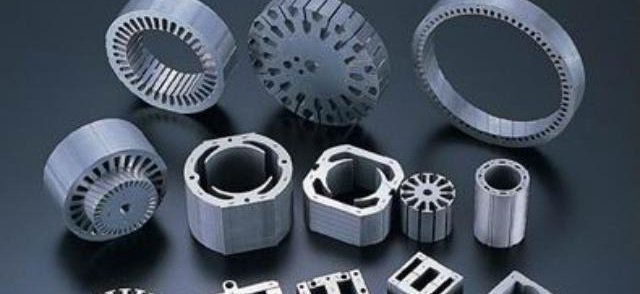
It is mainly used for machining specialized machine parts and other difficult-to-cut materials, as it allows for obtaining complicated shapes that are difficult or impossible to perform by machining (e.g. internal sharp corners and / or thread in hardened material or carbide), there is no force here cutting affecting the workpiece (although there is an impact on the outer layer, which hinders further processes such as polishing). Electroerosive machining includes electrospark, anode-mechanical and electrocontacting. Machining is carried out on hollowing machines, saws or anodic-mechanical grinders, etc. It is used for machining cemented carbides as well as shaping and regeneration of plastic forming tools, e.g. forging dies, injection molds.
Electroerosive machining can be basically divided into two types: electroerosive drilling and electroerosive cutting (WEDM - Wire Electrical Discharge Machining). In general, the difference between these methods is the type of working electrode (in the case of WEDM it is a rewound wire), the energy of discharges and the dielectric used. EDM treatment can be used for all materials whose electrical conductivity is greater than 10-2 S / cm.
Application of electrical discharge machining
Application of electrical discharge machining
- punches
- dies
- injection molds
- foundry molds
- in nuclear power for processing fuel rods
- in aviation for machining turbine blades and compressors